The kitchen renovation industry in the United States runs on one enormous assumption: that homeowners who are unhappy with their kitchen need to replace the cabinets. Cabinet manufacturers, big box stores, and kitchen design showrooms are all aligned around the same sale. Remove the old. Install the new. The average kitchen cabinet replacement project in 2025 runs between $12,000 and $45,000 depending on the size of the kitchen, the cabinet grade, and whether you include installation, countertops, and hardware. For a significant number of Tri-Cities homeowners, that number is not realistic. For most of them, it is also not necessary.
Cabinet painting is not a compromise. It is not a band-aid solution for homeowners who cannot afford to do it properly. A professionally painted set of kitchen cabinets using the right products, preparation and process will last a decade or more and produce a finish that most people cannot distinguish from new factory-painted cabinetry. The total cost for most Tri-Cities kitchens runs between $1,800 and $5,500. The math is not subtle.
What Cabinet Replacement Actually Costs in the Tri-Cities Right Now
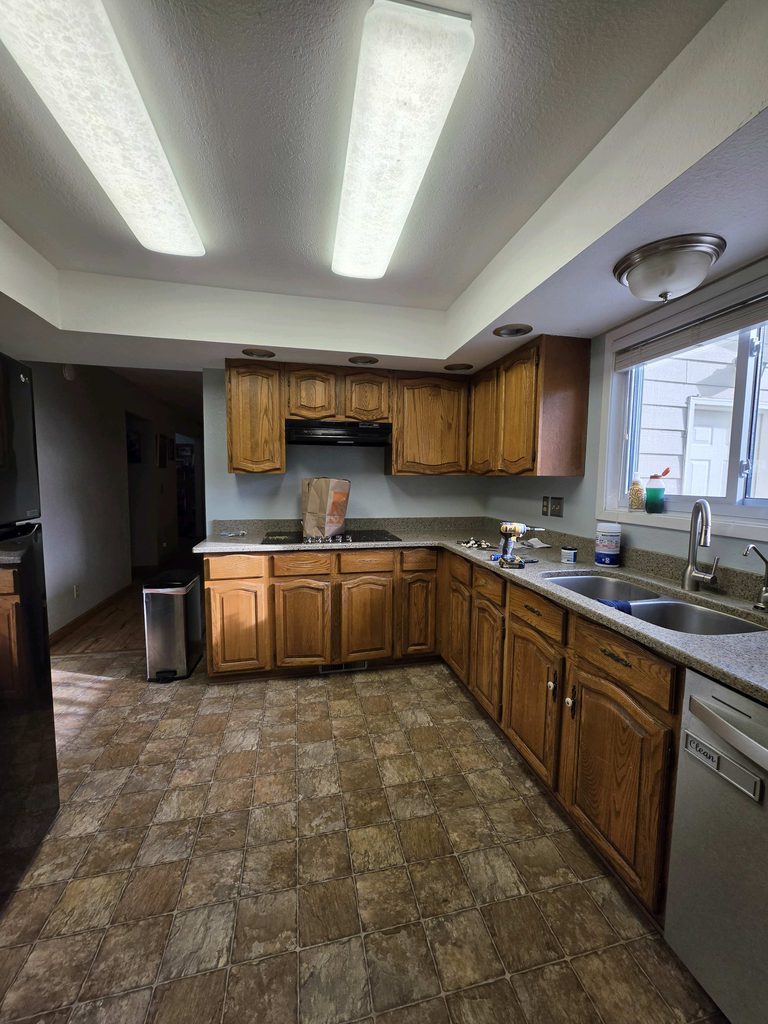
Pull out your phone and call three kitchen cabinet companies in Kennewick or Richland. Ask for a ballpark quote on a 200-square-foot kitchen with standard upper and lower cabinets. You are going to hear numbers ranging from $18,000 to $40,000, not including installation, not including countertop replacement if needed, not including hardware.
The breakdown typically looks like this. Semi-custom cabinets for an average Tri-Cities kitchen: $8,000 to $22,000 in materials alone. Installation: $2,500 to $8,000. Countertop replacement, if the old ones do not fit the new cabinet dimensions: $3,000 to $12,000 for quartz or granite. New hardware: $500 to $2,500. Electrician if recessed lighting is being added or moved: $800 to $2,000. The numbers compound quickly.
This does not include the three to six weeks the kitchen is non-functional during the project, the cost of eating out or ordering in during demolition and installation, and the design time required to coordinate a project of this scope. Cabinet replacement is a major renovation. It should be treated as one and budgeted accordingly.
Stock cabinets from the big box stores are cheaper in materials but the installation complexity remains. And the result is visibly what it is: stock cabinetry that looks like it came from a big box store. For many homeowners in the Tri-Cities who bought a home with builder-grade oak or maple cabinets in good structural condition, the real question is not whether to replace but whether the structure is worth painting.
When Cabinet Boxes Are Worth Keeping
The single most important question in any cabinet painting vs replacement evaluation is the structural integrity of the cabinet boxes. The boxes are the frames that are screwed to the wall, the carcasses that support the doors and hardware. If those are solid and the interiors are in usable condition, painting is a viable option. If the boxes are swollen, delaminating, falling apart at the joints, or so deteriorated that additional support is needed, replacement is the right choice regardless of budget.
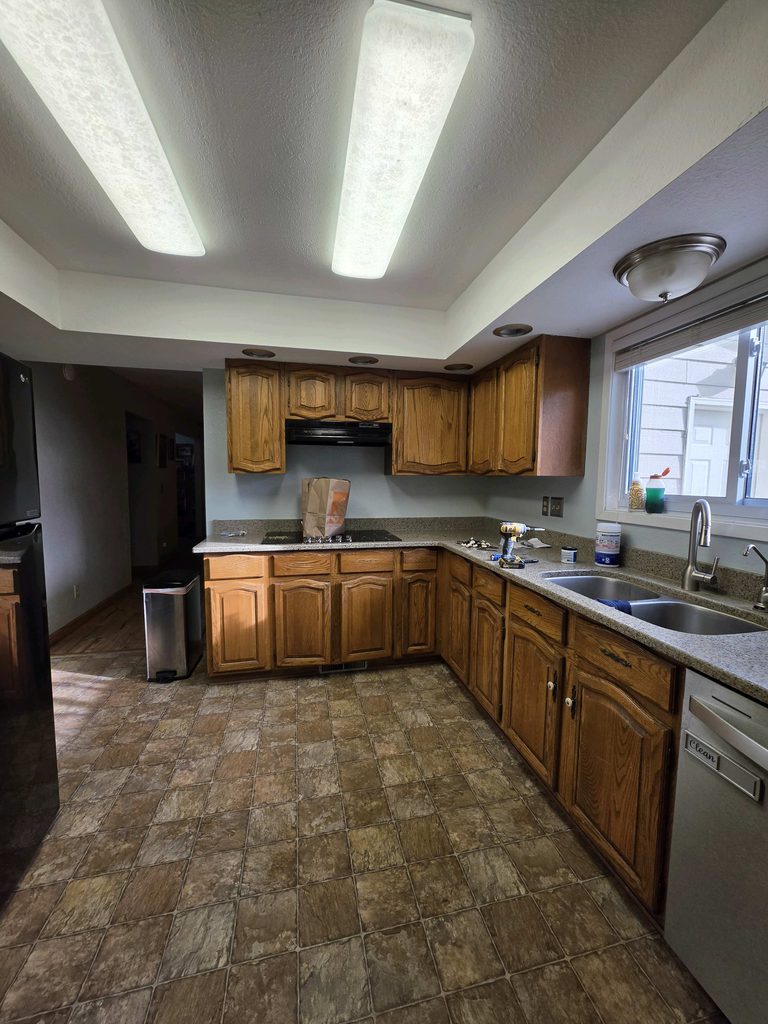
Builder-grade cabinets from the 1990s and 2000s are often structurally sound despite looking dated. The typical golden oak cabinets installed in Kennewick and Richland homes built between 1990 and 2010 are usually solid wood face frames with particleboard or plywood boxes. The face frames and doors paint well. The boxes hold up. The primary complaint is the color and the hardware from a different design era.
Run through this checklist before making the call. Are the cabinet boxes firmly attached to the wall with no loose sections? Are the shelves solid with no warping or moisture damage? Are the drawers running smoothly or can the slides be replaced economically? Are the doors hanging correctly or have the hinges stripped out? If the answers are mostly yes, paint them. If the answers are mostly no, replace them.
What Professional Cabinet Painting Costs in Kennewick, Richland and Pasco
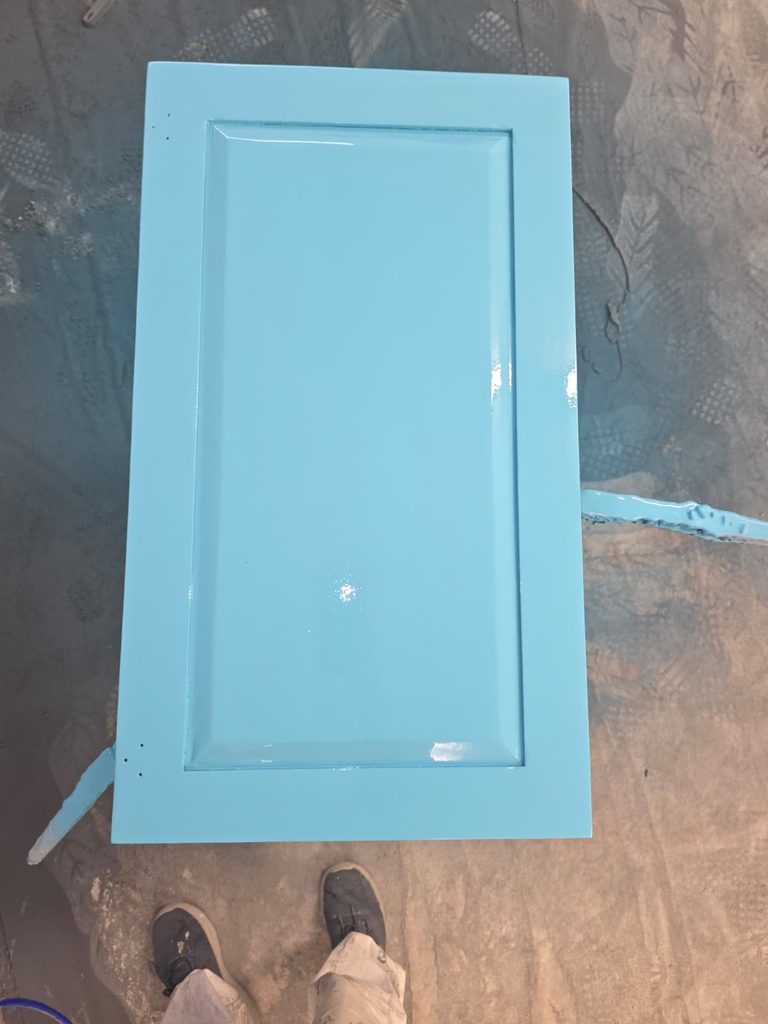
The pricing for professional cabinet painting in the Tri-Cities depends on four variables: the number of doors and drawer fronts, whether the boxes are being painted, the condition of the existing surface, and the product specification.
A typical Tri-Cities kitchen with 25 to 35 doors and drawer fronts, standard size, in reasonable condition, using a professional spray application with a hard urethane topcoat, runs between $1,800 and $3,500. Larger kitchens with 40 to 55 door and drawer fronts run $3,200 to $5,500. Kitchens requiring additional degreasing, heavy surface prep, or significant repairs before painting run to the upper end of those ranges.
The product specification matters significantly. A brush-on latex paint applied in place will look like a brush-on latex paint and will begin showing wear within two to three years. A spray-applied two-component urethane or acrylic-alkyd enamel applied to properly degreased, primed, and sanded surfaces will look like factory finish and last eight to twelve years under normal kitchen use. This is not a false distinction. They are completely different products and processes, and the price difference between them is real and justified.
The Process That Separates a Good Cabinet Paint Job From a Bad One
The failure mode for cabinet painting is almost always the same. Inadequate degreasing. Skipped primer. Brush or roller applied directly to the surfaces. A standard latex wall paint used instead of a hard enamel. The result looks acceptable for the first six to twelve months and then begins visibly failing as the film separates from insufficiently prepared surfaces and the soft latex finish wears through at door edges and contact points.
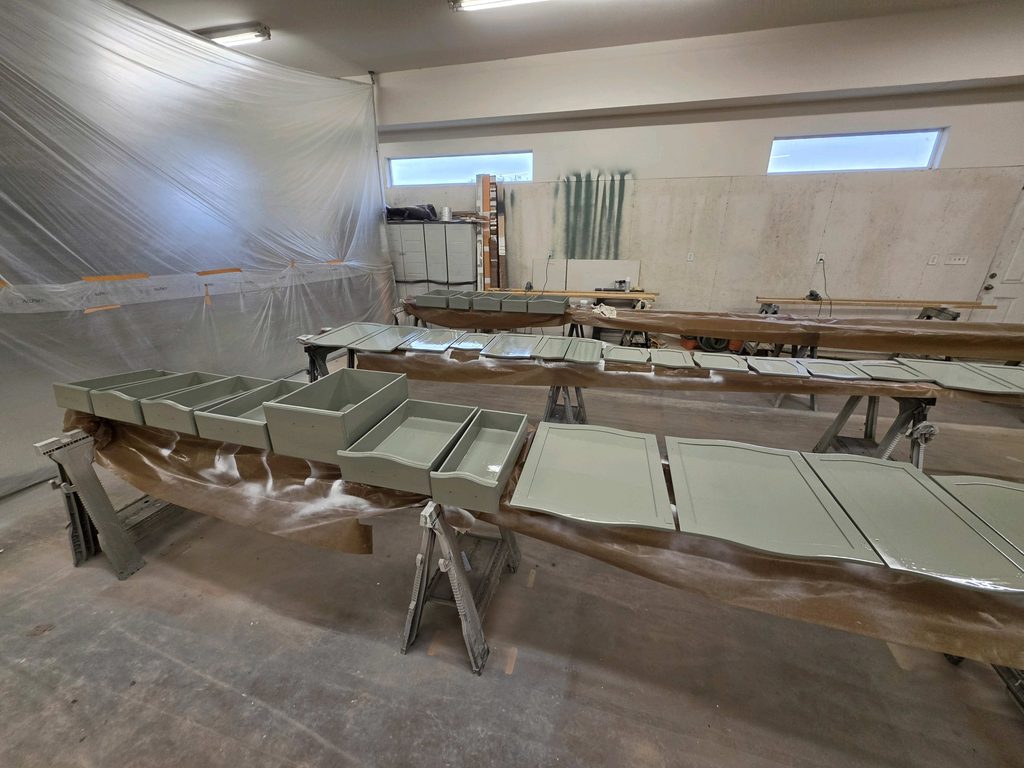
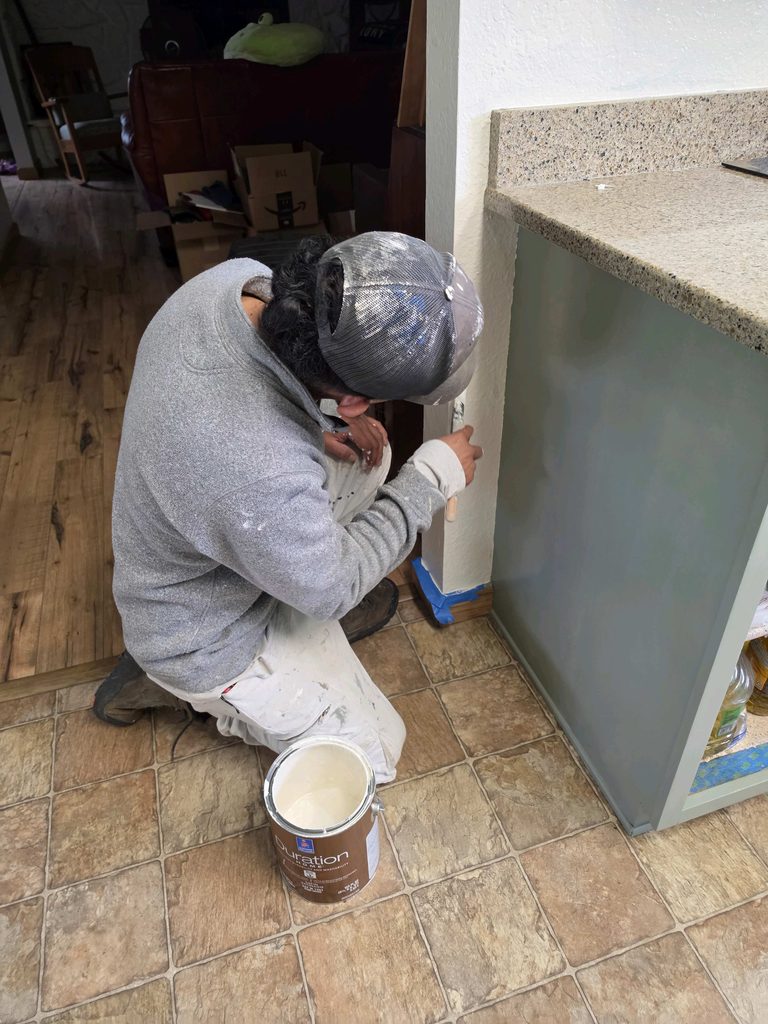
A proper professional cabinet painting process looks like this. Remove all doors and drawer fronts. Transport them off-site or to a controlled spray area. Clean every surface with a degreaser specifically formulated to cut kitchen grease, which is polymerized and significantly harder to remove than general household grime. Light sand all surfaces to abrade the existing finish and create a mechanical bond for primer. Apply a bonding primer. Sand again with fine grit. Apply two coats of a professional-grade hard finish enamel by spray application, sanding between coats. Allow full cure time before reinstallation. In place, paint all boxes and interiors with the same primer and finish sequence using brush and short-nap roller where spray access is limited.
This process takes three to five days in a standard Tri-Cities kitchen. The kitchen is usable throughout most of the project since the doors are removed and returned. The finished result, when done correctly, is smooth, hard, and durable in ways that DIY cabinet painting simply cannot replicate without the same equipment and product access.
Color and Hardware: Where the Real Transformation Happens
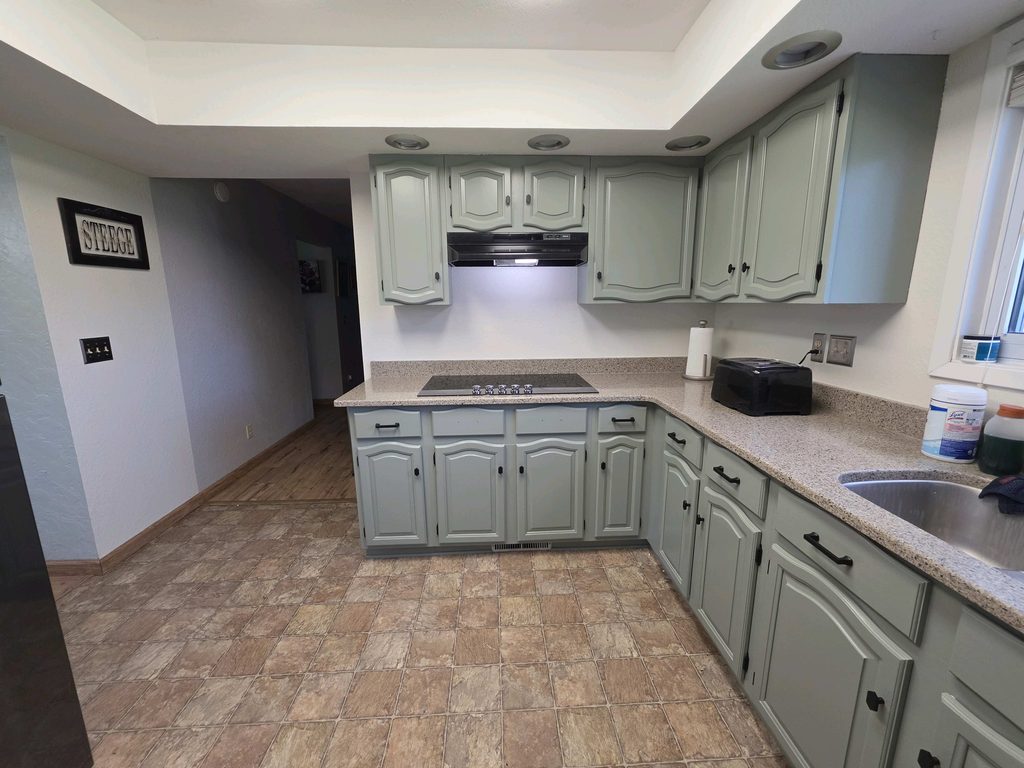
Painting cabinets is not just about changing a color. It is about resetting the visual baseline of a kitchen. The typical 1995 Kennewick kitchen had golden oak cabinets, brass hardware, and laminate countertops in a beige or almond palette. Today’s equivalent homes are being sold and renovated with painted white or soft gray cabinetry, brushed nickel or matte black hardware, and quartz or stone countertops. The cabinet boxes and layout are identical. The visual language is entirely different.
A cabinet painting project combined with new hardware can completely transform the perceived modernity of a kitchen for a total investment of $2,500 to $7,000 including materials and labor. A full cabinet replacement achieving the same visual result costs $18,000 to $45,000. The kitchen still has the same bones. The experience of being in it and showing it to buyers or guests is dramatically different.
Color selection for cabinet painting deserves real thought. White is the most popular choice and for good reason: it photographs well, makes kitchens feel larger, appeals broadly to buyers if the home might be sold, and provides a clean backdrop for countertop and hardware selection. Warm whites and soft off-whites like Sherwin-Williams Alabaster, Benjamin Moore White Dove, and Sherwin-Williams Shoji White dominate current kitchen design. Navy, forest green, and charcoal gray are the most popular alternatives for homeowners wanting personality in the kitchen.
Cabinet Refacing: The Third Option Nobody Explains Well
There is a third option that sits between painting and full replacement: cabinet refacing. Refacing replaces the doors and drawer fronts with new ones while retaining the existing boxes. The box faces get veneered with the new door material to match. The result looks like new cabinets. The cost is typically 40 to 60 percent of full replacement.
Refacing is the right choice when the doors and drawer fronts are damaged, warped, or have so much texture and grain variation that painting would not produce a satisfactory result, but the boxes are structurally solid and well-positioned. It is also the right choice when the homeowner wants a specific material, like real wood veneer or a premium finish, that painting cannot replicate.
For most Tri-Cities homeowners, painting remains the most cost-effective option when the existing cabinets are in reasonable condition. But understanding all three options before making a decision is the right approach.
The Return on Investment Case for Cabinet Painting Before Selling
Real estate data from the Tri-Cities market consistently shows that kitchens are the highest-return renovation category for homes being prepared for sale. A kitchen that looks dated, regardless of its functional condition, costs sellers money in the final sale price. Buyers discount heavily for what they perceive as future renovation costs, and they almost always over-estimate those costs.
A professionally painted kitchen with new hardware is one of the single highest-return pre-sale investments a Tri-Cities homeowner can make. The cost is $2,000 to $5,500. The perceived value increase in the eye of the buyer is often $10,000 to $25,000. The listing photographs dramatically better. The first showing produces a completely different reaction from buyers who have been comparing the home to neighbors with updated kitchens.
This return calculation changes completely if the cabinets are structurally unsound or if the kitchen layout is genuinely non-functional for contemporary living. In those cases, replacement or a full kitchen renovation may be necessary to compete in the local market. But for the vast majority of standard Tri-Cities homes built between 1985 and 2015 with solid but dated cabinets, paint is both the fastest and the smartest investment.
Frequently Asked Questions
1. How long does professional cabinet painting last in a kitchen?
A professionally applied two-component urethane or hard enamel finish, applied over properly prepared surfaces, will last eight to twelve years under normal kitchen use. The critical variables are surface preparation quality, product selection, and the application process. A spray-applied finish lasts significantly longer than a brush-applied latex.
2. Can laminate or MDF cabinets be painted?
Yes, both can be painted, but they require different preparation than solid wood or plywood surfaces. Laminate needs a bonding primer specifically formulated for non-porous surfaces. MDF is more straightforward but its exposed edges absorb primer and paint rapidly and require additional coats to seal properly. Both can be painted successfully with the right approach.
3. Do you have to move out of the kitchen during cabinet painting?
No. The kitchen remains functional throughout most of the project. Doors and drawer fronts are removed for off-site or spray-area application. The kitchen can still be used for basic food preparation during the three to five days the project takes. Access to the sink, refrigerator and stovetop is maintained throughout.
4. What is the most durable paint for kitchen cabinets?
Professionally applied two-component urethane and alkyd-based cabinet enamels are the most durable options available. Sherwin-Williams Emerald Urethane Trim Enamel and Benjamin Moore Advance are the two most widely specified products in the professional cabinet painting market. Both cure to a hard, smooth finish that resists moisture, grease and daily contact significantly better than standard latex paint.
What Happens When You Paint Over Cabinets That Should Be Replaced
Painting cabinets that are past the point of structural viability is a waste of money. The paint cannot fix a cabinet box that is swollen from water damage, a door that warps back to its original shape within weeks of being rehung, or hinges that have stripped out of particleboard that has lost its density. If you paint over a failing cabinet rather than acknowledging the underlying problem, you end up with a painted failing cabinet. The cosmetic improvement lasts until the structural problem reasserts itself, which happens faster than most homeowners expect.
The test before committing to paint over replacement is direct and simple. Press on the bottom panel of the cabinet boxes inside. If it flexes significantly or feels soft, moisture has compromised the substrate. Open and close every drawer. If the slides are binding, bent, or the drawer box itself is pulling apart at the joints, assess whether the repair cost is reasonable versus replacement. Run your hand along the door edges. If they are delaminating or the veneer is lifting significantly, the door is not a good painting candidate. Honest assessment before the project starts saves the cost of a paint job applied to a surface that was not worth painting.
Timing: When Cabinet Painting Makes the Most Sense
The best time to paint kitchen cabinets in the Tri-Cities is during the cooler months, late fall through early spring, for a specific practical reason. Urethane and alkyd cabinet products cure slowly, and in the peak summer heat of Eastern Washington, cure times on some formulas compress in ways that can affect the final hardness of the film. More importantly, kitchen windows are less likely to be left open during cooler months, which reduces airborne dust contamination during the application and initial cure period. Dust settling into a wet cabinet finish before it has skinned over produces a surface texture that has to be sanded out and recoated. Scheduling the project in a time of year that minimizes this risk is a practical quality management decision.