
People spend hours choosing the right color. Then they pick the wrong finish, put it on the walls, and wonder why the room looks wrong even though the color is exactly what they wanted. This happens constantly. The finish changes everything. It changes how the color reads under different lighting, how well the wall holds up to cleaning, how obvious every imperfection becomes, and how professional the final result looks. Getting this wrong is expensive because you have to repaint. Getting it right costs nothing extra.
Flat, eggshell and satin are the three finishes most homeowners will actually use on interior walls. Semi-gloss and high-gloss belong primarily on trim, doors and cabinetry. Understanding where each finish lives in the hierarchy, why each one behaves differently under light and cleaning, and which room genuinely needs which finish is the entire game of interior paint selection. This guide covers everything a homeowner needs to make the right call before a single drop of paint hits the wall.
What Paint Sheen Actually Means and Why It Changes Everything
Sheen is the measure of how much light a painted surface reflects back at you. Not the color. Not the brand. Not the price per gallon. The reflective quality of the cured film. Low sheen surfaces absorb light and create a soft, muted, enveloping appearance. High sheen surfaces bounce light around the room and create a crisp, clean, sometimes harsh look depending on the environment. Every step up the sheen ladder brings two trade-offs. More sheen means more durability and washability. It also means more visibility of every flaw in the wall underneath.
1. Bedrooms: Eggshell
This is the core tension in paint finish selection. Flat finishes hide imperfections beautifully but are nearly impossible to clean. High-gloss finishes are almost surgical in their cleanability but will show every dent, every roller mark, every texture inconsistency on the wall like a spotlight. Eggshell and satin live in the practical middle zone, which is exactly why they dominate residential interior painting. But that middle zone is not a monolith. The difference between eggshell and satin is meaningful. Choosing the wrong one in the wrong room creates real problems.
Paint technology has advanced significantly in the past decade. Modern premium formulas have closed the durability gap between sheens considerably. A Sherwin-Williams Emerald in flat sheen will outlast a budget-grade satin product by years in terms of washability and resistance to scuffing. The sheen still matters. But brand and formula quality now matter equally. Cheap paint in any sheen will disappoint. Premium paint at the right sheen will perform.
Flat and Matte Paint: Misunderstood and Misused
Flat paint does not reflect light. None. The film is essentially non-glossy and diffuses all incident light rather than bouncing it back. This creates a chalky, velvety surface that reads as extremely rich and saturated in color. Walk into a room painted in a deep charcoal flat finish and the walls feel like they are wrapping around you. It is a genuinely dramatic effect.
The problem is durability. Traditional flat paint cannot be wiped. You touch it with a damp cloth to remove a mark and you lift the paint film instead. The pigment particles in a flat finish are held loosely in a binder with minimal sheen-building resin, which means the surface has no protective layer to resist abrasion. A child’s handprint. A scuff from a piece of furniture. An enthusiastic cleaning attempt. All of these permanently mark a flat-painted wall.
Where flat paint belongs: ceilings, and ceilings almost exclusively. Adult master bedrooms in homes where the occupants are careful. Formal dining rooms that see no children and minimal traffic. Accent walls in media rooms that will not be touched. That is the real list. Not hallways. Not family rooms. Not anywhere a child might brush against the wall walking to the bathroom at night.
Matte is not always the same as flat, though the terms get used interchangeably. True flat paint typically has a light reflectance value (LRV) of zero to five percent. Matte often sits slightly higher, sometimes up to ten percent. Some premium matte formulas are now engineered for washability without adding visible sheen. Benjamin Moore Aura in matte is one example. Sherwin-Williams Emerald in flat is another. These products behave more like eggshell in terms of cleanability while looking like flat on the wall. They cost significantly more but they solve the flatpaint-in-high-traffic-space problem completely.
Eggshell: The Most Popular Interior Finish and When It Falls Short
Eggshell is named for the surface it resembles. Pick up an egg. Look at the shell under light. That low, barely perceptible sheen is what an eggshell paint finish delivers on a wall. It is not matte. It is not shiny. It sits in the quiet zone between the two and it hides imperfections far better than satin while still being cleanable in a way that flat paint is not.
This is why eggshell dominates residential interior painting. It is forgiving during application. Roller lines blend out more easily than they do with satin. Touch-ups blend more seamlessly. The wall does not act like a spotlight for every texture inconsistency. And at the same time, a lightly dampened cloth will clean most everyday marks without lifting the film.
Where eggshell belongs: living rooms, dining rooms, bedrooms, home offices, and any room where the primary goal is a beautiful, low-key wall that will not demand constant attention. It is the safe and genuinely correct choice for most rooms in most homes.
Where eggshell falls short: heavy-use wet areas. A kitchen that sees serious cooking will eventually break down an eggshell finish faster than a satin. A bathroom with poor ventilation where steam and condensation regularly hit the walls will push an eggshell finish to its limits. A hallway where a shoulder brushes the wall every single day should probably have satin. Eggshell is not delicate. It is not the right finish everywhere either.
One point professionals make consistently: the difference between eggshell at different quality levels is enormous. A builder-grade eggshell and Sherwin-Williams Emerald in eggshell are not the same product. The builder-grade will scuff on contact. The premium product will wipe clean repeatedly. If the goal is to use eggshell in a moderately trafficked hallway or family room, invest in a premium formula.
Best Practices for Painting Hardwood Floors
Satin has a pearl-like quality. Under light, it glows. Not in the harsh way of semi-gloss, but in a way that adds depth and dimension to a room. It is significantly more durable than eggshell. It resists moisture better. It cleans more reliably. And it looks more refined than eggshell on surfaces where you want a sense of quality and intention.
The trade-off is unforgiving. Satin will show wall imperfections that eggshell would hide. Every ding, every patched hole, every texture variation in the drywall surface will catch light under satin and become visible in a way it would not under eggshell. This is not a small detail. In older homes with plaster walls, homes with textured or orange-peel drywall, or rooms that were patched and repaired before painting, satin can make the wall look worse than eggshell would.
Satin also requires more careful application. Roller marks show up more readily. Touch-ups are harder to blend. The wet edge dries faster, which creates lap lines if the painter is not working efficiently. These are professional concerns as much as product concerns. In the hands of an experienced painter working with the right equipment, satin produces a result that looks expensive and deliberate.
Where satin belongs: kitchens, bathrooms, laundry rooms, mudrooms, hallways, stairwells, and children’s rooms. Any room that sees meaningful moisture, grease, or fingerprint traffic. Satin is also the appropriate choice for cabinetry when the spec calls for a wall paint rather than a dedicated cabinet enamel.
Semi-Gloss and Gloss: What Professionals Actually Use These For
Semi-gloss on walls is almost always wrong. There are exceptions. Certain contemporary kitchen designs intentionally use semi-gloss on all surfaces to create a lacquer-like industrial aesthetic. Some bathrooms with perfectly smooth plaster walls use it to dramatic effect. These are design choices made with full awareness of the consequences.
Semi-gloss belongs on trim. Baseboards, door casings, window casings, chair rails, crown molding. All of it. The reason is contrast. When the wall is eggshell and the trim is semi-gloss, there is a visual separation between the two surfaces that reads as professional and intentional. When both are the same sheen, the room looks flat and undifferentiated. The finish contrast is as important as the color contrast.
Interior doors in semi-gloss. Front doors in semi-gloss or gloss. Interior shutters in semi-gloss. Kitchen and bathroom cabinetry in either a dedicated cabinet enamel or semi-gloss wall paint. These are the primary applications. High-gloss on furniture and millwork in traditional or classical interiors. That is the complete list of where these sheens belong in a residential setting.General process
Room-by-Room: The Correct Finish for Every Space
1. Bedrooms
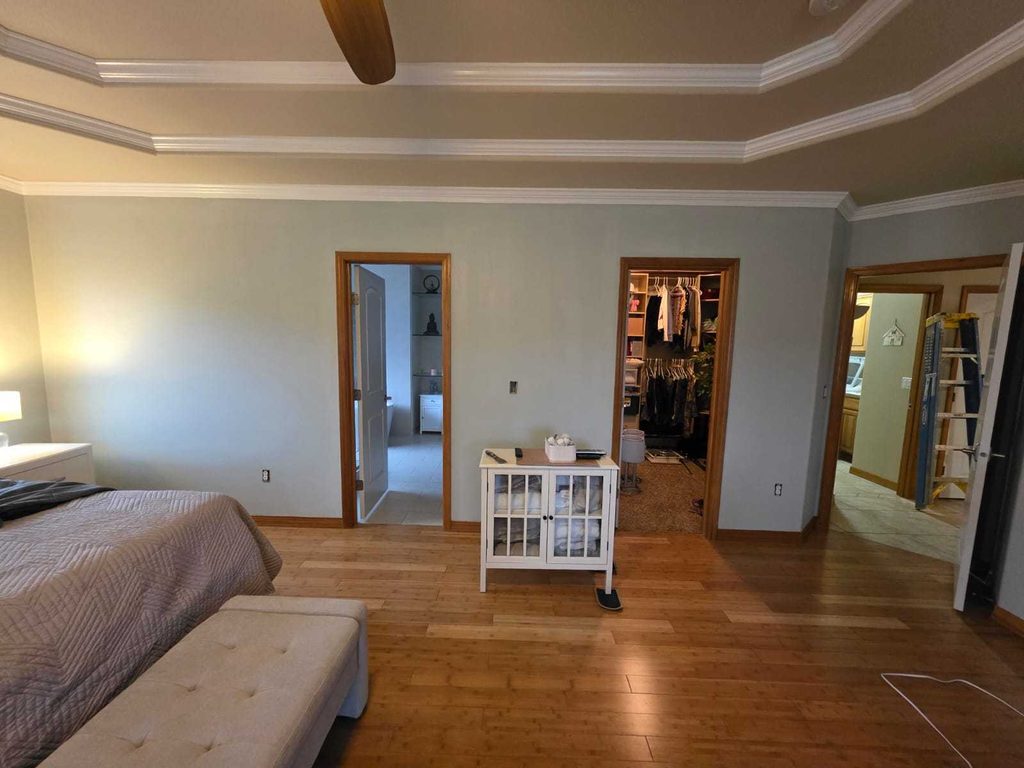
Eggshell. Full stop. Bedrooms are low-traffic environments where the primary goal is atmosphere. The soft, color-rich quality of eggshell serves bedrooms better than satin, and the reduced durability is not a problem because bedrooms take almost no abuse. The exception is a child’s bedroom, which should be satin for the washability reason. Kids’ rooms are not low-traffic environments no matter how calm the child is.
2. Living Rooms and Dining Rooms
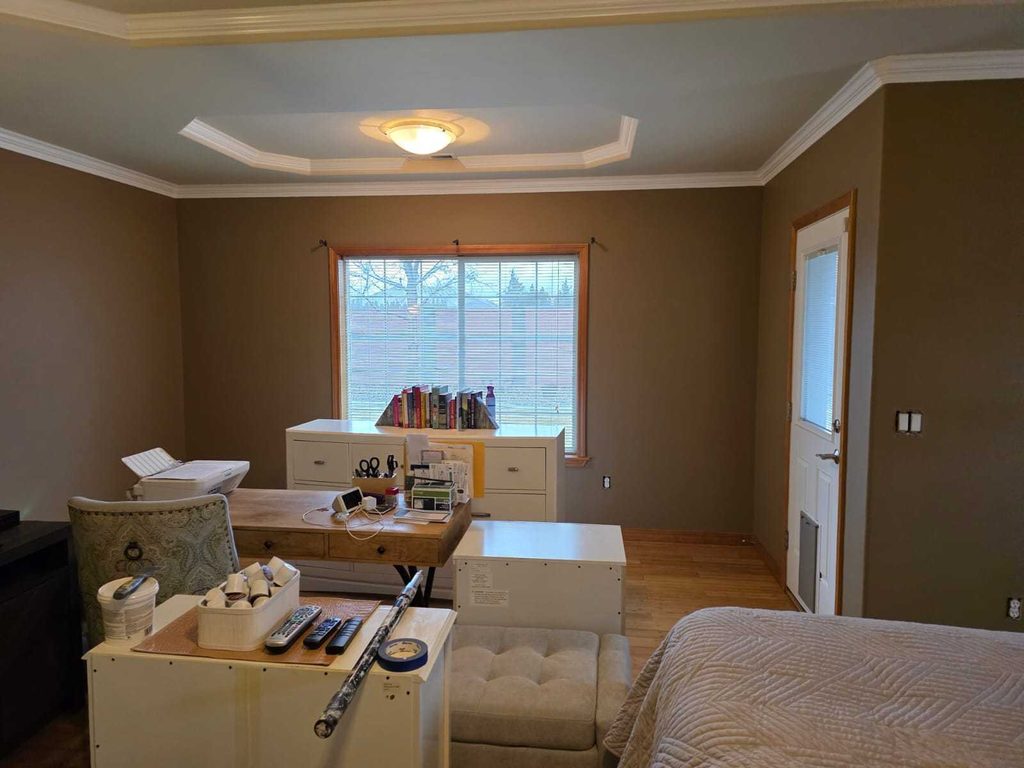
Eggshell in most situations. If the living room sees significant activity from children or pets, or if the homeowner tends to wipe walls regularly, step up to satin. In a formal dining room used a few times per month, flat or matte can be genuinely stunning if the surface condition warrants it. Satin in a formal dining room often looks overly commercial.
3. Kitchens
Satin. This is not debatable. Kitchens produce grease, steam, and splatter. The walls above the stovetop and sink see this regularly. Eggshell will break down under repeated cleaning in a kitchen. Satin holds up. On kitchen cabinets, use a dedicated cabinet enamel rather than any standard wall paint sheen.
4. Bathrooms
Satin on walls. Semi-gloss is acceptable but not necessary unless the ventilation is extremely poor and moisture accumulation is a constant problem. The primary concern is mildew resistance and the ability to wipe the walls down. Satin provides both. Look for products that specifically include mildewcide in the formula.
5. Hallways and Stairwells
Satin. Hallways are the highest-contact surfaces in any home. Shoulders brush the walls. Furniture gets moved through them. Children run their hands along the wall as they walk. Eggshell will show this abuse within months. Satin handles it.
6. Ceilings
Flat. Always. Ceiling paint is almost universally flat white for good reason. Ceilings have imperfections and joints that any sheen above flat will pick up and amplify under overhead lighting. The flat ceiling also absorbs light rather than bouncing it back, which creates a soft, neutral backdrop that recedes visually and makes the room feel larger.
7. Trim, Doors and Baseboards
Semi-gloss on all of it. Baseboards take abuse from feet, vacuum cleaners and furniture. Door casings get touched hundreds of times per week. Interior doors get handled, leaned against, and scuffed constantly. Semi-gloss handles all of this and the visual contrast between semi-gloss trim and eggshell walls is what makes a room look professionally painted.
8. Kids Rooms
Satin. Accept this before you paint and you will save yourself from repainting in eighteen months. Children will find ways to mark walls that adults cannot predict or prevent. Satin wipes clean. A premium satin can be scrubbed repeatedly without showing signs of wear. It is the only sensible choice.
The Lighting Problem Nobody Talks About
Here is something that surprises most homeowners: paint finish changes appearance under different light sources. A satin wall under warm incandescent light reads very differently from the same wall under cool LED lighting. The same color in eggshell looks noticeably different under north-facing natural light versus south-facing afternoon sun.
This is why paint samples applied directly to the wall and evaluated under the room’s actual lighting conditions are non-negotiable before committing to any finish. A paint chip in a store under fluorescent lighting tells you almost nothing about how that color and that sheen will read in your specific room. Spend the ten dollars on a sample pot. Apply a large swatch. Look at it at different times of day and under both natural and artificial light before making a decision.
Sheen amplifies this lighting sensitivity. Higher sheen means more light interaction, which means more variation in how the surface reads under changing conditions. A flat wall is relatively stable throughout the day. A satin wall will shift noticeably. This is not necessarily a problem but it is something to understand before you commit.
Paint Quality vs Sheen: Which Matters More
Both matter. But if forced to choose between premium paint in the wrong sheen and cheap paint in the right sheen, take the premium paint every time. The chemistry of the binder, the quality of the pigment loading, and the engineering of the formula determine how the surface performs over years of use far more than the reflective quality of the film.
Modern premium products have also significantly blurred the traditional sheen-based durability hierarchy. Sherwin-Williams Emerald in a matte finish is washable in ways that a standard eggshell from a budget line never will be. If you are working with a premium product, the sheen choice becomes more about aesthetics and application characteristics than durability.
This is why professional painters often push clients toward premium lines even when the sheen the client wants is traditionally considered less durable. The product quality compensates. This conversation is worth having with any painter you hire before the project starts.
The Most Common Sheen Mistakes Homeowners Make
Painting the entire interior in one sheen. Every room, every surface, one sheen to rule them all. It saves a little time during the project and creates a flat, undifferentiated result that looks like a rental unit. The wall-versus-trim sheen differential matters. Ceiling versus wall sheen matters. Spend the extra time on the right finish per surface.
Using flat in a hallway because it looked good in the bedroom. The hallway is not the bedroom. Traffic levels are completely different. The flat finish will be visibly marked within weeks.
Applying satin on walls with significant imperfections without addressing those imperfections first. Satin will find every flaw in a wall and put a spotlight on it. If the walls have patches, texture variations, or surface damage, either fix them properly before applying satin or choose eggshell to hide them.
Attempting touch-ups with satin paint that has been on the shelf for more than a year. Satin does not touch up well even under the best conditions. Old paint that has shifted in sheen from aging compounds the problem dramatically. Fresh paint from the same batch is the only reliable approach for satin touch-ups.
Frequently Asked Questions
1. Is eggshell or satin better for interior walls?
Eggshell is better for bedrooms, living rooms, and dining rooms where traffic is lower and atmosphere matters more than heavy-duty cleanability. Satin is better for kitchens, bathrooms, hallways, and children’s rooms where moisture and contact are higher. Neither is universally better. The correct answer depends on the specific room and how it is used.
2. Can you use flat paint in a bathroom?
Technically yes. Practically, no. Flat paint in a bathroom will absorb moisture, develop mildew and begin to degrade quickly. It also cannot be wiped without damaging the film. Use satin in bathrooms and look specifically for products that include mildewcide in the formula.
3. What paint finish hides imperfections best?
Flat and matte finishes hide wall imperfections better than any other sheen because they do not reflect light back at the viewer. The lower the sheen, the less the surface acts as a mirror that shows dents, patches and texture inconsistencies. The trade-off is cleanability.
4. Should trim and walls be different sheens?
Yes. Always. Semi-gloss trim against eggshell walls is the standard professional combination and for good reason. The sheen differential creates visual separation between the surfaces, makes the room look intentionally designed, and ensures the trim can withstand the handling it receives without the walls looking over-glossy.
5. Is satin finish paint easy to touch up?
No. Satin is one of the more difficult sheens to touch up invisibly because the reflective surface makes any sheen variation immediately visible. Touch-ups should use paint from the same batch within the same season if possible. Old paint that has shifted in sheen will create a noticeable patch. This is one reason some painters recommend eggshell for walls: it is significantly more forgiving on touch-ups.