Eastern Washington has a painting problem. Not an isolated one. A systematic, climate-driven one that affects hundreds of homes across Kennewick, Richland and Pasco every year. Homeowners spend $3,000 to $7,000 on an exterior repaint, watch it hold up for two years, and find themselves dealing with peeling, fading, and blistering that should not be happening on a job that was supposed to last a decade.
The failure is almost never the fault of the color. It is almost never a product defect. In the overwhelming majority of cases, exterior paint failure in this climate traces back to one of three causes: the wrong products for the conditions, inadequate surface preparation, or moisture getting into the substrate before or after the application. Understanding how each of these failure modes develops is the difference between a paint job that lasts three years and one that lasts twelve.
What Eastern Washington Does to Exterior Paint That No Other Climate Quite Replicates
The Tri-Cities sits in a high-desert environment that stacks multiple extreme stressors on painted exterior surfaces simultaneously. The city of Kennewick averages over 300 days of sunshine per year, ranking it among the sunniest cities in Washington State by a wide margin. That sun delivers UV radiation at intensities that cause significant photo-oxidation in paint films not rated for continuous high-UV exposure.
Summers here are brutal by any measure. Temperatures regularly reach 105 to 110 degrees Fahrenheit, sometimes more. Paint that sits on a south-facing or west-facing exterior surface all afternoon in July is experiencing temperatures significantly higher than the ambient air temperature because the dark substrate absorbs and radiates heat. Black or very dark surfaces on a hot day can reach 160 degrees Fahrenheit. This thermal stress alone breaks down the binder in paint films that are not formulated for it.
Then winter arrives. The Tri-Cities gets cold. Below-freezing temperatures are common through December, January and February. Any moisture that has entered the wood siding, penetrated failed caulk around windows, or accumulated behind the paint film from inadequate vapor management will freeze. Frozen water expands. Expanding water exerts enough force to rupture the paint film from beneath and begin the separation that leads to peeling.
The cycle of extreme heat and hard freeze, repeated season after season, is the fundamental mechanical force behind most exterior paint failure in this region. A paint film that is only marginally flexible, or that was applied over a compromised substrate, will fail faster here than almost anywhere in the Pacific Northwest west side.
Failure Mode 1: UV Damage and Thermal Degradation
Walk up to a home in Kennewick that has been painted with a low-quality or non-UV-rated exterior paint and rub your hand across the surface. If it comes away with a white or chalky residue on your palm, the paint film is undergoing what chemists call photo-oxidation. The UV radiation is breaking down the binder, releasing the pigment particles as chalk. The paint is literally dissolving in slow motion under the sun.
Chalking is the early warning sign. Left unaddressed, it progresses to fading, then to cracking as the binder loses flexibility, then to peeling as the film separates from the substrate beneath it. The entire sequence can unfold in three to five years on a south-facing wall painted with a product rated for moderate UV exposure rather than the high-UV conditions of Eastern Washington.
The solution is product specification. Sherwin-Williams Duration Exterior, Emerald Exterior, and Benjamin Moore Aura Exterior are three products specifically engineered for high-UV environments. They carry superior UV stabilizer packages in their binder chemistry that resist photo-oxidation for significantly longer than standard exterior paints. They cost more per gallon. They last dramatically longer. In this climate, the premium is not optional.
Thermal cracking is the companion failure mode. Paint that has been hardened and made brittle by extreme heat cannot flex with the expansion and contraction of the substrate beneath it during temperature cycling. The result is a spiderweb of hairline cracks that begin on sun-exposed surfaces and progressively widen as weather cycles accumulate. These cracks are entry points for moisture, which begins the second failure sequence.
Failure Mode 2: Moisture Intrusion
Moisture is the enemy of every painted exterior surface regardless of climate. But the freeze-thaw cycle of the Tri-Cities makes moisture management particularly critical here. Water getting behind a paint film in a mild climate might cause some localized peeling. The same water in a climate with repeated hard freezes will cause catastrophic film separation.
Moisture gets into exterior surfaces through several pathways. The most common is failed caulking around windows, doors, utility penetrations, and siding joints. Caulk is not decorative. It is the moisture barrier between the elements and the structural components of your home. When caulk fails, which it does on virtually every exterior surface within seven to ten years, water enters the substrate during rain and irrigation and saturates the wood or OSB behind the siding.
The second pathway is painting over wet or damp wood. An exterior surface that was not allowed to fully dry after pressure washing before painting, or that was painted in cool, humid conditions where moisture content in the wood substrate was elevated, will trap moisture beneath the paint film. As the wood dries, that moisture pushes the film outward. On hot days, the vapor pressure beneath the film builds dramatically, creating blisters that eventually rupture and produce the characteristic bubble-then-peel pattern seen on many Tri-Cities exteriors.
The third pathway is inadequate or absent primer application over bare wood or repairs. Raw wood is highly porous and absorbs moisture readily. Primer seals the pores and provides a consistent surface for the topcoat to bond to. Paint applied directly over raw wood without primer has no adequate bond. It sits on the surface rather than integrating with it and separates under the first significant moisture event.
Failure Mode 3: Inadequate Surface Preparation
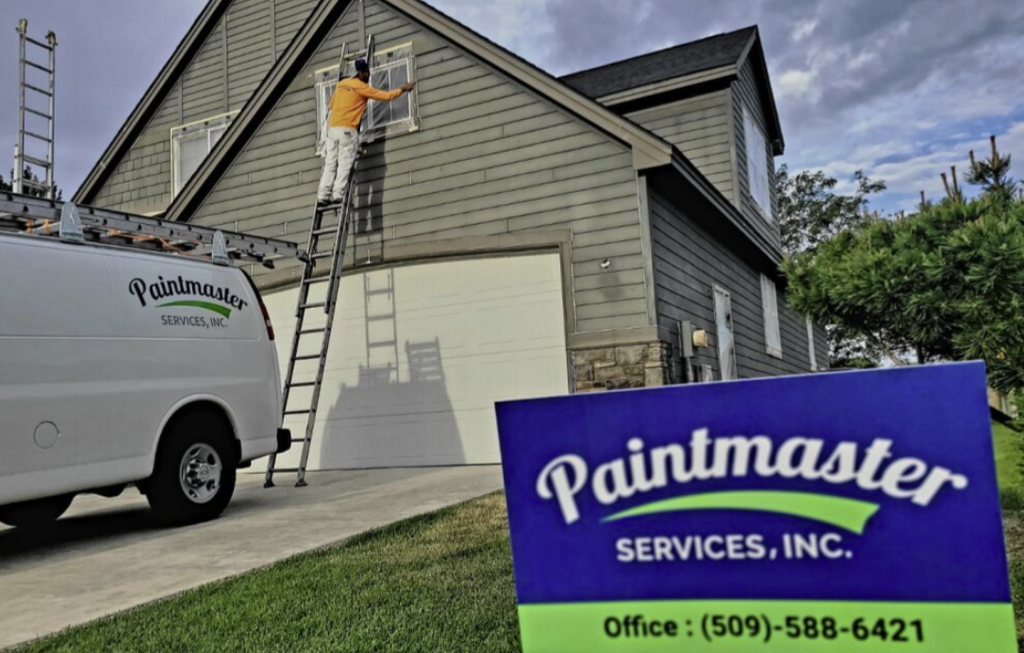
This is the most common cause of early paint failure in the Tri-Cities and it is entirely preventable. Surface preparation is the part of a paint job that the homeowner cannot see after the project is done. A contractor who skips prep saves time, wins the bid, and leaves you with a job that begins failing within two years. The paint sits on top of whatever was there before, including dirt, grease, mildew, loose paint, and an uneven surface profile that prevents proper adhesion.
Proper surface preparation for an Eastern Washington exterior repaint includes: pressure washing the entire surface to remove dirt, mildew, chalking residue and loose paint. Allowing the surface to dry completely, which in Eastern Washington’s typically dry summer conditions takes 24 to 48 hours minimum. Scraping all remaining loose or peeling paint down to a solid surface. Sanding the edges of those scraped areas smooth to eliminate ridges in the finished paint surface. Caulking every failed joint, window frame, door frame, and penetration with a paintable elastomeric caulk rated for temperature cycling. Spot-priming all bare wood and repairs. Then applying the topcoats.
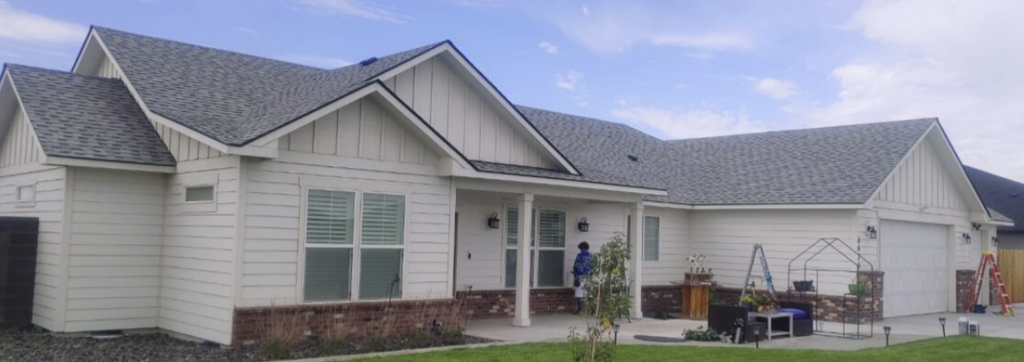
Contractors who skip steps in this sequence are not saving you money. They are deferring a portion of the project cost to a future repaint that will need to happen far sooner than it should. The cheapest exterior paint job is the one done correctly once rather than done cheaply twice.
Siding-Specific Failure Patterns in the Tri-Cities
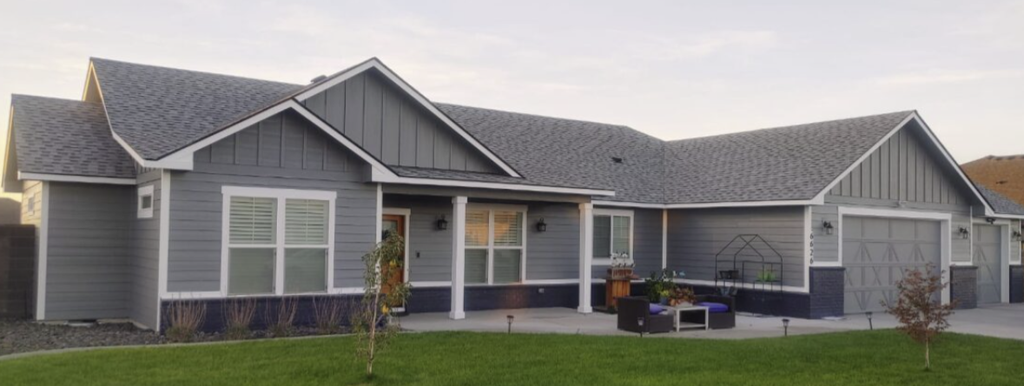
1. Wood Siding
Wood siding painted in Eastern Washington without adequate surface preparation and UV-rated products will show splitting along the grain and cracking at the edges of boards within a few years. The specific failure point is wherever moisture can enter the end grain or any location where the paint film is thin. End cuts on horizontal siding are particularly vulnerable. These must be sealed with a penetrating end-grain sealer before any priming or topcoat application.
2. Fiber Cement Siding (HardiePlank)
Fiber cement is more dimensionally stable than wood and does not absorb moisture in the same way. Its primary vulnerability in this climate is at the cut edges, where the factory seal is breached. Raw fiber cement at cut edges absorbs moisture readily and can delaminate over time if not sealed. The paint product also matters: fiber cement requires a 100 percent acrylic formulation for long-term adhesion.
3. Stucco
Stucco is porous by nature. Eastern Washington’s heavy UV and hard freezes create significant thermal stress on stucco surfaces. Cracks in stucco are entry points for moisture that can penetrate to the structural elements beneath. Stucco must be inspected for cracks before any painting. Cracks wider than a hairline require filling with an elastomeric patching compound before a masonry primer and finish coat are applied. Do not paint over stucco cracks. They will telegraph through the paint film within one to two years and then continue to grow as the underlying problem is unaddressed.
How Long Should Exterior Paint Last in Eastern Washington
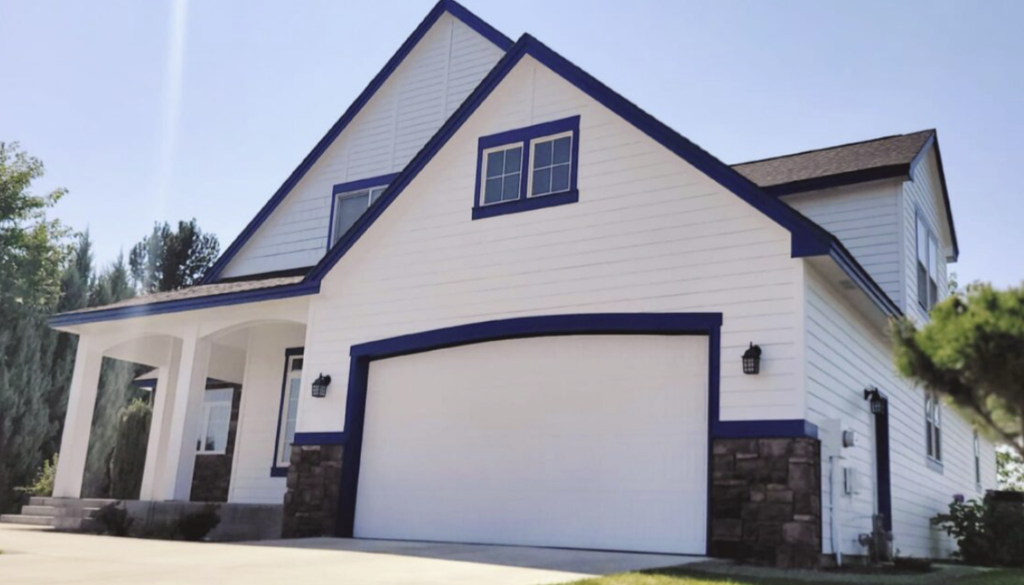
A professionally prepared and properly applied exterior paint job using premium products in this climate should last eight to twelve years on protected surfaces and six to ten years on highly sun-exposed south and west-facing elevations. These numbers assume no major moisture events, no deferred caulking maintenance, and no mechanical damage to the paint film during the period.
A budget job using standard exterior paint with minimal preparation will show visible failure in two to four years on sun-exposed surfaces. The degradation then accelerates because the failed film allows moisture to reach the substrate, compounding the repair scope required for the next repaint.
The lesson is straightforward and does not change. Pay the right amount for the right products and the right preparation and repaint on a ten-year cycle. Or pay less now and repaint on a four-year cycle. The total cost over twenty years is dramatically higher for the cheaper approach.
Frequently Asked Questions
1. Why is my exterior paint peeling after only two years?
The most common causes are inadequate surface preparation before application, painting over damp or wet wood, failed caulking allowing moisture intrusion, use of non-UV-rated paint products, or application in temperatures outside the product’s rated range. In Eastern Washington, UV intensity and temperature cycling accelerate all of these failure modes. A professional assessment of the specific failure pattern can determine the primary cause.
2. How can I tell if my exterior paint is failing before it starts peeling?
Chalking is the earliest sign: run your hand across the surface and check for a powdery residue on your palm. Fading beyond what sun exposure alone would explain, hairline cracking in the film, bubbling or blistering, and soft spots in the paint that compress slightly under pressure are all early warning signs that precede active peeling.
3. Can I paint over peeling exterior paint without removing it first?
No. This is the single most common mistake in DIY exterior painting. Paint applied over a peeling or poorly adhered film will bond to the existing failing paint rather than to the substrate. When the underlying film continues to fail, it takes the new paint with it. All loose and peeling paint must be removed down to a solidly adhered layer before any new paint is applied.
4. What paint products work best on Eastern Washington exteriors?
Products engineered for high UV exposure and temperature cycling perform best in this climate. Sherwin-Williams Duration Exterior, Emerald Exterior, and Benjamin Moore Aura Exterior are the three products we most commonly specify for Eastern Washington exterior projects. All three carry superior UV stabilizer packages and provide meaningful warranty coverage for their performance claims.
Signs Your Home Needs a Repaint Before Active Peeling Starts
Most homeowners wait for paint to actively peel before calling a contractor. This is the wrong threshold. By the time paint is peeling, the damage is compounding. Water has been entering the substrate through the failed film for some period before visible peeling begins. The repair scope and the project cost are both higher than they would have been if the project had been scheduled at the earlier warning stage.
The earlier signs are worth acting on: chalking on sun-exposed surfaces, which shows up as a white residue on your palm when you rub the siding. Fading that is uneven across the surface or that has progressed beyond what the original color suggests. Hairline cracking in the film at corners, at trim edges, or along lap lines in horizontal siding. Bubbling or blistering at any point on the surface. Caulk that has pulled away from window frames or is visibly cracked. Any one of these is a condition that warrants a professional assessment before the problem progresses to active peeling and the associated moisture damage underneath.
In the Tri-Cities, the optimal inspection timing is late spring, after winter freeze-thaw cycles have had their effect but before summer heat begins to accelerate UV degradation. Walking the exterior of your home in April or May and checking for these early warning signs is a maintenance practice that can save a meaningful amount of money by catching surface preparation needs before they multiply.