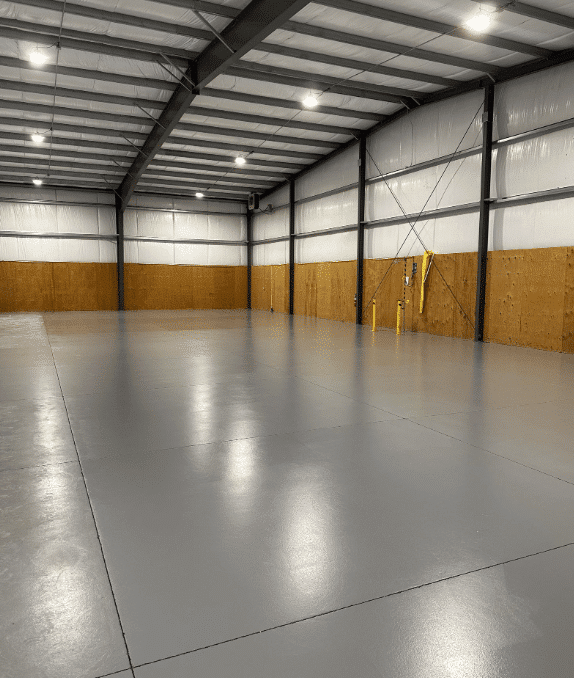
An uncoated concrete garage floor is a concrete garage floor. Functional, dusty, stained, and visually uninspiring in a way that makes the space feel like a utility rather than a part of the home. A professionally coated garage floor is a different experience entirely. Clean. Hard. Chemical-resistant. Easy to sweep. Capable of making a garage feel like a finished space rather than an afterthought. In the Tri-Cities market, more homeowners in Kennewick, Richland and Pasco are making this upgrade, and the options available from a professional floor coating contractor have expanded significantly beyond the basic gray paint-the-floor approach that most people remember from twenty years ago.
This guide covers the real options for garage floor coatings in the Tri-Cities, what each system looks like and how it performs, what the realistic costs are for professional installation, and what distinguishes a professional installation from the DIY kits available at hardware stores. Because the difference is substantial.
Why Eastern Washington Is a Particularly Good Climate for Garage Floor Coatings
The Tri-Cities climate actually favors epoxy and polyaspartic floor coatings in ways that some other climates do not. The primary enemy of concrete garage floors in wet, humid climates is moisture vapor transmission from below grade, which creates pressure beneath the coating that causes delamination over time. Eastern Washington has very low ambient humidity and minimal below-grade moisture pressure in most residential settings. This means properly installed floor coatings here have an excellent chance of maintaining their bond to the substrate over many years.
The summer heat does create some challenges. Epoxy products have minimum and maximum application temperature windows, and a July afternoon in Kennewick can exceed the maximum for some products. Professional contractors account for this by scheduling applications in the early morning when temperatures are within range, or by using polyaspartic formulas with wider temperature tolerance. Homeowners attempting DIY installation on a hot summer afternoon often get an application failure because of temperature.
The Options: Epoxy vs Polyaspartic vs Decorative Flake Systems
Three primary system types dominate the residential garage floor coating market in the Tri-Cities. They are not interchangeable and they are not equally appropriate for every situation. Understanding the differences before committing to a system is worth the time.
Two-Component Epoxy
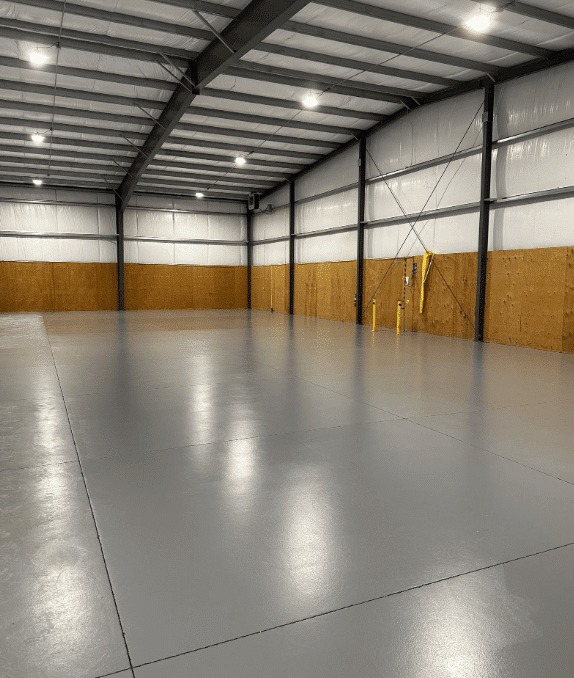
True two-component epoxy involves mixing a resin with a hardener immediately before application. The chemical reaction that follows produces an extremely hard, durable floor surface with excellent adhesion to properly prepared concrete and outstanding resistance to oil, gasoline, most household chemicals, and abrasion. A properly installed epoxy floor in a residential garage will last fifteen to twenty years under normal vehicle and foot traffic use.
The limitations of epoxy: cure time. You are typically looking at 24 to 72 hours before foot traffic and five to seven days before vehicle traffic depending on the specific product and ambient temperatures. Standard epoxy also has limited UV stability. Garage floors that receive direct sunlight for portions of the day will experience yellowing and chalking of the epoxy film over time if a UV-stable topcoat is not applied over the base coat.
Polyaspartic Coatings
Polyaspartic is a more recent chemistry that has taken significant market share from standard epoxy in residential garage applications. It cures dramatically faster than epoxy, often in two to four hours for light foot traffic and 24 hours for vehicle traffic. It is also significantly more UV-stable than standard epoxy, meaning a polyaspartic floor will resist yellowing in sun-exposed applications where epoxy would not.
The trade-off is the short working time. Once mixed, polyaspartic sets fast. An inexperienced applicator who is not working efficiently will get lap marks, material waste, and an uneven finish. Professional installation is more important for polyaspartic than for epoxy for this reason. In the hands of an experienced contractor, polyaspartic produces excellent results with faster return-to-service than any epoxy alternative.
Decorative Flake Systems
A flake system uses vinyl color flakes broadcast into a wet base coat to create a terrazzo-like decorative appearance. The flakes hide minor concrete imperfections and substrate color variations effectively. They also add texture to the surface, which provides better slip resistance than a smooth solid-color coating. A polyurethane or polyaspartic topcoat over the flake broadcast provides UV stability, chemical resistance and wear protection.
Flake systems are the most popular choice among Tri-Cities homeowners who want a garage floor that looks significantly different from bare concrete. The color options are extensive and the finished result photographs well. They are also among the most forgiving systems in terms of hiding any minor application inconsistencies beneath the topcoat.
Why Professional Installation Matters Enormously
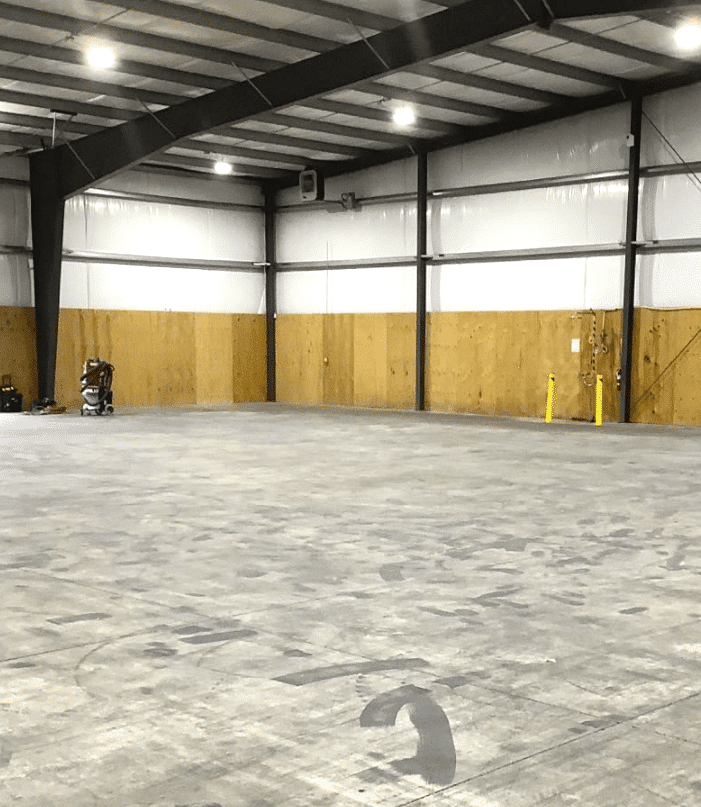
The single largest factor in floor coating performance and longevity is concrete surface preparation, specifically diamond grinding. Most epoxy failures, including the infamous peeling of hardware store DIY floor coating kits, trace directly to inadequate surface preparation.
Concrete has a surface layer called laitance: a thin, weak zone of calcium carbonate and other material that floats to the surface during the curing process. If a floor coating is applied to this laitance layer, the coating bonds to the laitance rather than to the underlying concrete. When the laitance eventually weakens under thermal and mechanical stress, it takes the floor coating with it. This is why budget floor coatings applied without surface preparation fail, sometimes within a year.
Professional contractors use diamond grinding equipment to remove the laitance and open the concrete surface to the correct profile for the specified coating system. This profile, measured in concrete surface profile (CSP) units, creates a mechanical bond between the coating and the concrete substrate that is dramatically stronger than any bond achievable on an unground surface. You cannot create this profile with acid etching or home pressure washing, which is why professional installation produces fundamentally different results from DIY application.
Moisture testing is the other professional step that distinguishes a properly managed installation. Excess moisture vapor emission from the concrete slab can cause blistering and delamination of the coating from below. Professionals test moisture vapor emission before applying any coating system and select appropriate products or moisture mitigation primers where testing indicates elevated moisture levels.
Cost of Professional Garage Floor Coatings in Tri-Cities
The cost for a professionally installed garage floor coating in Kennewick, Richland or Pasco depends on the size of the garage, the system selected, the condition of the existing concrete, and whether any crack repair or other surface remediation is needed before coating.
A standard two-car garage floor (approximately 440 square feet) in reasonable condition with no major cracks or repairs needed: a solid-color epoxy or polyaspartic system runs $1,800 to $2,800. A decorative flake system on the same floor runs $2,200 to $3,500. A three-car or oversized garage runs proportionally higher.
Garages with significant oil contamination require additional degreasing and preparation steps that add cost. Floors with cracks need repair before coating. Garages where the existing floor was previously painted or coated need the existing coating removed before the new system is applied, which adds significantly to the preparation labor.
Compare these numbers to the hardware store DIY floor coating kits that run $100 to $400 for materials. The difference is not just in the professional installation. The products themselves are different categories. The hardware store products are one-component water-based epoxy paints that sit on the surface rather than bonding to it chemically. Professional two-component systems are a different technology entirely.
The Installation Process: What to Expect on the Day
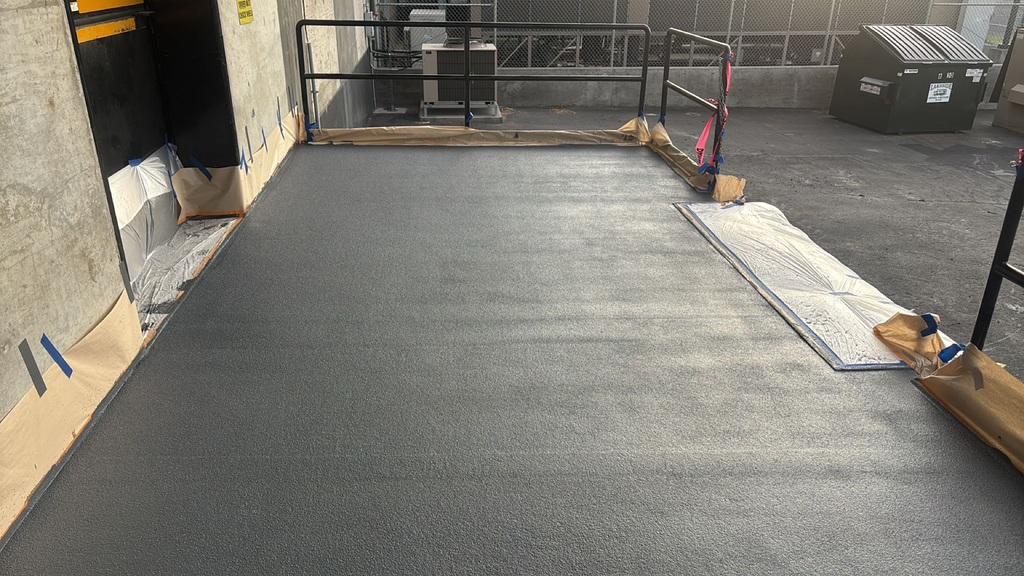
A professional garage floor coating installation typically takes one to two days depending on the system. Day one involves preparation: moving everything out of the garage, diamond grinding the entire floor, repairing any cracks or damage, cleaning all dust and debris from the grinding, and applying the base coat. For epoxy systems, the base coat cures overnight and the crew returns on day two for the topcoat application. For single-day polyaspartic systems, the base coat, flake broadcast, and topcoat can all happen within a single working day.
You will need to keep vehicles out of the garage during the cure period. For epoxy systems, plan for five to seven days before driving on the new floor. For polyaspartic systems, 24 to 48 hours is typically sufficient. Most contractors communicate these timelines clearly before the project begins.
Frequently Asked Questions
1. How long does a professionally coated garage floor last in Eastern Washington?
A professionally installed two-component epoxy or polyaspartic system, applied over properly diamond-ground concrete, will last fifteen to twenty years under normal residential garage use in the Tri-Cities. Regular cleaning and avoiding dragging sharp or rough-bottomed objects across the surface will extend that lifespan.
2.Can I coat my garage floor if it has oil stains?
Yes, but the oil contamination must be properly addressed before any coating is applied. Oil that has penetrated the concrete will prevent proper adhesion and cause the coating to peel above the contaminated area. Professional degreasing, sometimes in multiple applications, is required to neutralize the contamination before grinding and coating. In cases of severe contamination, a penetrating epoxy primer designed for oil-affected concrete provides additional adhesion assurance.
3.What color options are available for garage floor coatings in the Tri-Cities?
Solid-color systems are available in a wide range of standard colors plus custom mixed options. Flake systems offer extensive color combinations with flakes in multiple colors broadcast at varying densities to create different effects. The most popular residential choices are medium gray, tan, and charcoal solid colors, and multi-color flake blends that create a terrazzo-like appearance.
4. How do I maintain a coated garage floor?
Regular sweeping or dust mopping to remove abrasive particles is the primary maintenance requirement. Wet mopping with a mild cleaning solution removes automotive fluid drips and general dirt. Avoid dragging heavy objects with rough bottoms across the surface. Clean automotive fluids, fertilizers, and pool chemicals promptly as these can etch or discolor some coating systems if left in contact for extended periods.
DIY vs Professional: What the Hardware Store Kits Cannot Do
Home improvement stores sell single-component water-based epoxy floor coating kits for $100 to $400. They are marketed with images of beautifully finished garages and promises of easy application. The reality of these products is that they are not two-component epoxy systems. They are water-based acrylic or latex coatings with epoxy added to the marketing name. They do not bond chemically to concrete the way a true two-component product does. They sit on the surface rather than penetrating it. And they are typically applied to concrete that has been acid-etched rather than diamond-ground, which provides a fraction of the surface profile that proper mechanical preparation creates.
The result: most hardware store epoxy floor coatings begin peeling within one to three years, sometimes sooner in garages that see temperature cycling. The peeling starts at the edges, where the product bond is weakest, and progresses inward. Recoating over a failed single-component system requires removing the existing coating first, which adds significant cost and preparation time to what the homeowner expected to be a simple refresh.
Professional two-component systems require mixing a resin and a hardener in specific ratios. The chemical reaction produces a polymer network that bonds to the concrete substrate at a molecular level rather than simply adhering to the surface. The result is a coating that behaves fundamentally differently from a surface-level application. It does not peel under normal vehicle traffic and thermal cycling. It resists chemicals that would lift a surface coating. The difference is not incremental. It is categorical.
Maintenance and Care for a Coated Garage Floor in Tri-Cities
A professionally coated floor requires minimal maintenance to maintain its appearance and performance. Regular sweeping removes abrasive grit that can scratch the surface over time. Occasional mopping with a mild pH-neutral cleaning solution removes automotive fluid residue, tire marks, and general dirt. The cleaning is notably easier than bare concrete, which harbors dust and absorbs stains. A garage with a coated floor can be swept clean in a fraction of the time required to manage bare concrete.
Hot tire marks are a concern with some coating systems. When a car that has been driving sits in a garage, the hot tires can temporarily plasticize the coating at the contact point, and when the car leaves the next morning it can lift the coating in a tire-shaped patch. This phenomenon is primarily associated with single-component coatings and lower-grade two-component systems. Premium polyaspartic and commercial-grade epoxy systems engineered for vehicle traffic resistance handle hot tire contact without this failure. Confirm with your contractor that the specified system is rated for vehicle use before installation.